Cash Box Serenade: Why the Folding Table Beats the Stage at DIY Rock Shows
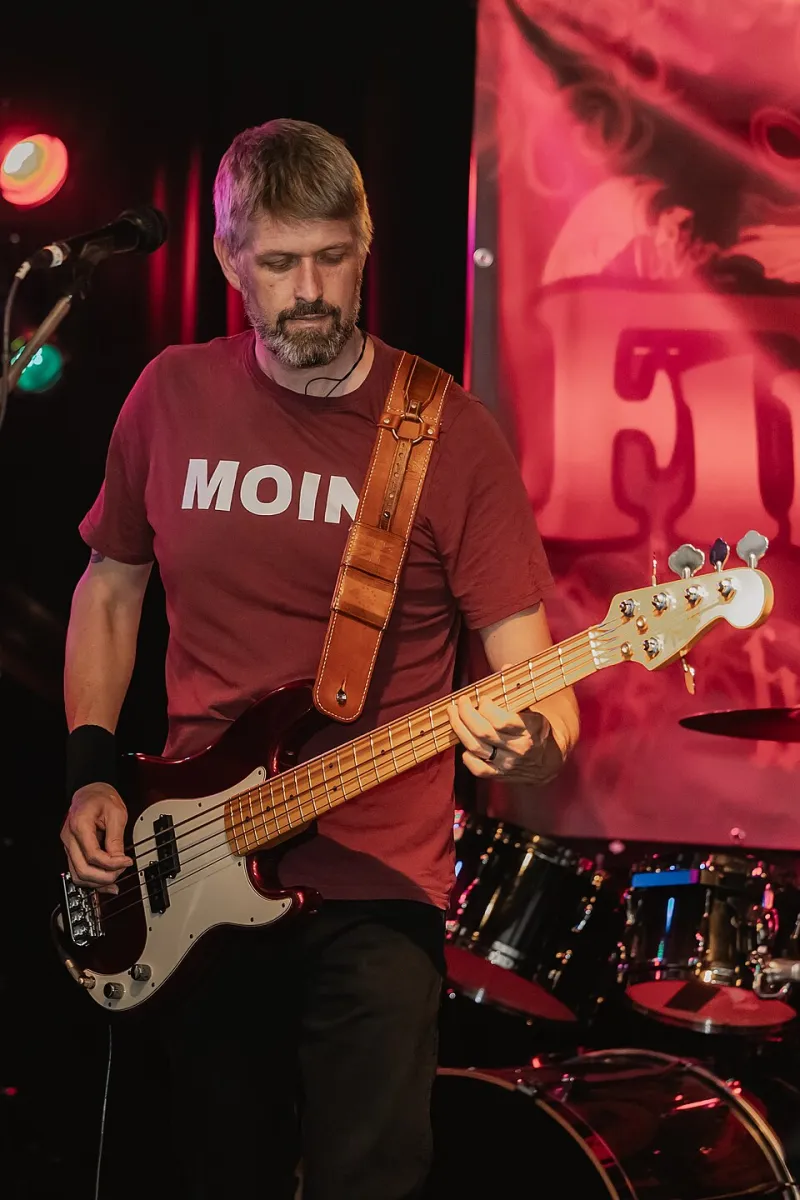
Photo: FF Band RD, CC BY 4.0, via Wikimedia Commons
At 9:47 on a Thursday in Cleveland, the last chord is still ringing when the crowd starts moving. Not toward the door. Toward a folding table near the back wall, where a trio from Akron is already pulling a cash box out from under a stack of tapes. The singer has a Sharpie in her teeth. The drummer is explaining Venmo to a kid in a hoodie. The bassist is trying to find a lamp angle that does not make the shirts look green. This is the merch table, and it is the scene's real living room.
The Second Stage
In a 120-cap room with a low ceiling and a PA held together by hope, the stage is where the songs happen. The table is where the band becomes human. You can ask about the pedal that sounded like a lawnmower. You can find out the tape was recorded in a basement in Kalamazoo. You can tell the guitarist you drove forty minutes because a friend posted a flyer. None of that happens at the barricade, because there usually is no barricade.
That is why the table matters. It is not an afterthought near the exit. It is the room's second stage, the place where the show keeps going after the set ends. In 2026, with gas prices, van repairs, and pressing delays all doing their part to make DIY touring harder, those ten square feet are also infrastructure.
The Math Behind the Folding Legs
Here is a rough picture. A five-piece band does a two-week run through the Midwest and East Coast. Gas runs $500 to $700, sometimes more. A short run of 100 cassettes costs a few hundred dollars. T-shirts cost $8 to $12 each before printing and shipping, and they sell for $25. Stickers are a dollar. Pins are two. The venue might pay a $150 guarantee, or pass a hat, or give the band a cut of door after the sound person gets paid.
Merch is not a bonus in that math. It is the difference between going home and going broke. A $25 shirt is not just cotton. It is a tank of gas split five ways. A $10 tape is breakfast. A $5 sticker is a parking meter. Most of these bands do not have tour support. They have a friend with a minivan, a group chat, and a Square reader that works when the venue wifi does not.
That is why the table gets tense. The person behind it is often the same person who just played forty minutes and is now trying to count singles while someone asks if the shirt comes in a medium. They are tired. They are also on the clock.
Etiquette for Ten Square Feet
There is no official rulebook, but there are things that make the table work. Buy something if you can. Cash helps. Do not haggle. Do not ask for the friend price unless you are actually a friend. Do not put your beer on the table. Do not interrupt while the band is counting a cash box. Wait until the transaction ends. If you want a photo, ask. If the shirt is sold out, ask about Bandcamp or the mailing list. If you are broke, say thanks and ask before taking a sticker. Do not call a band's merch exposure.
The person behind the table is not a vending machine with a playlist. They are a working musician or a friend who volunteered to help. Treat them like someone who just drove six hours in a van that smells like fries.
What the Table Actually Does
At a good DIY show, the table is also a bulletin board. There are flyers for next week's basement show, a zine someone traded for a tape, a stack of split cassettes from a band that played two towns over. Bands share tables. Touring acts leave stickers for local acts. A kid with $5 buys a pin and walks away like they got away with something. They did.
The table is where the scene does its bookkeeping, social and financial. A band that ignores it is remembered. A band that stands there, makes eye contact, and says thanks is remembered too. A venue that gives the table a lamp and some space is doing more for the scene than a venue with a fancy backline and no place to put a shirt stack. These are small things. They compound.
The Ten Square Feet Test
You can learn a lot about a rock scene by looking at its merch tables. Is the table lit? Is someone behind it? Does the band make eye contact? Does the crowd stop on the way out? If the answer is yes, the scene is probably healthy. If the table is dark and abandoned, the band might just be exhausted. Or the room might not know what it has.
Next time you go to a show, budget $10 or $25 for the table. Buy a tape, a shirt, a pin, a sticker. Say hey. Ask where the next show is. That is the front row. The stage gives you the songs. The table gives you the band.